


“SUBHANALLAH / SKIBIDI” (2025)
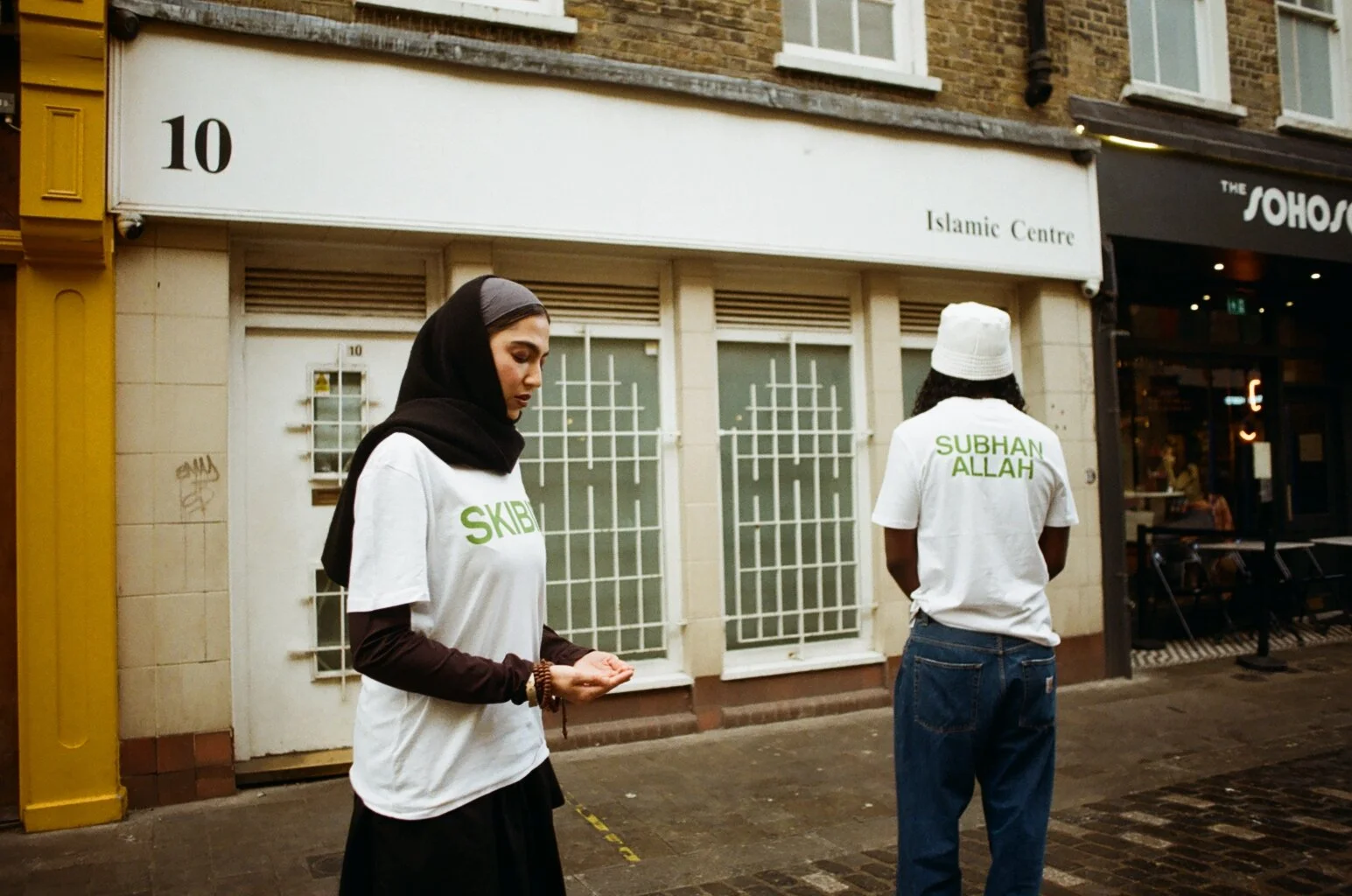
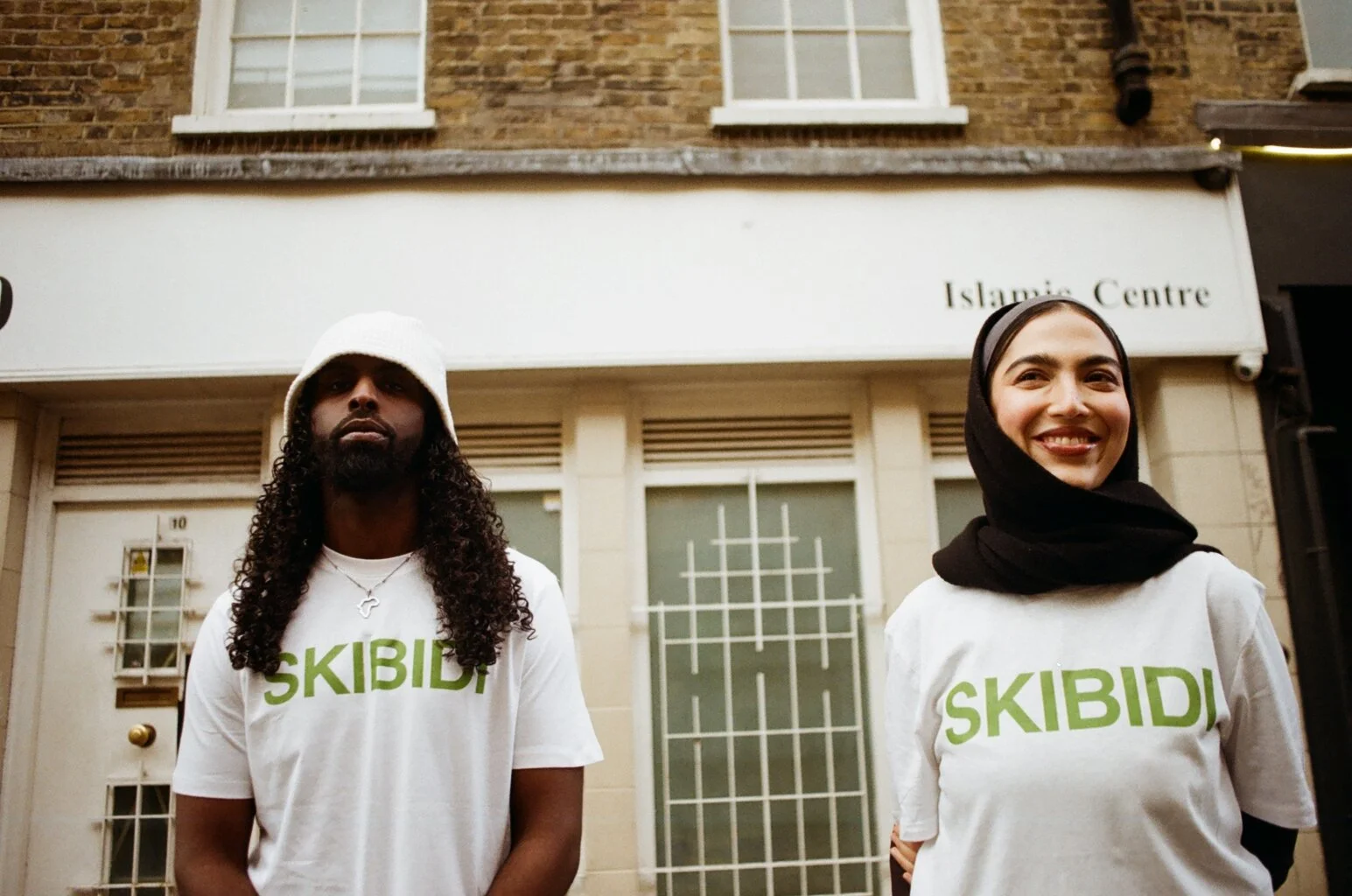
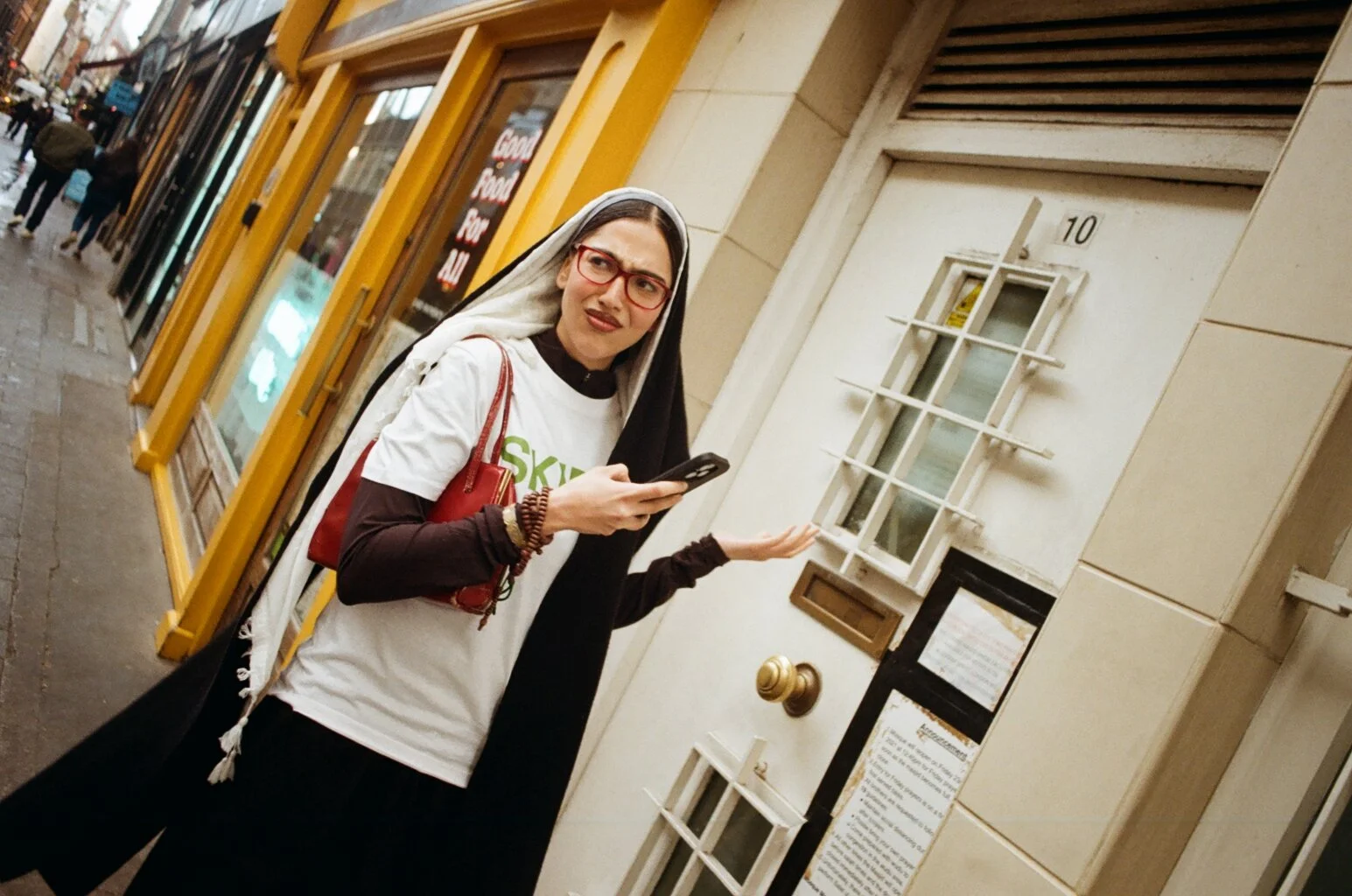
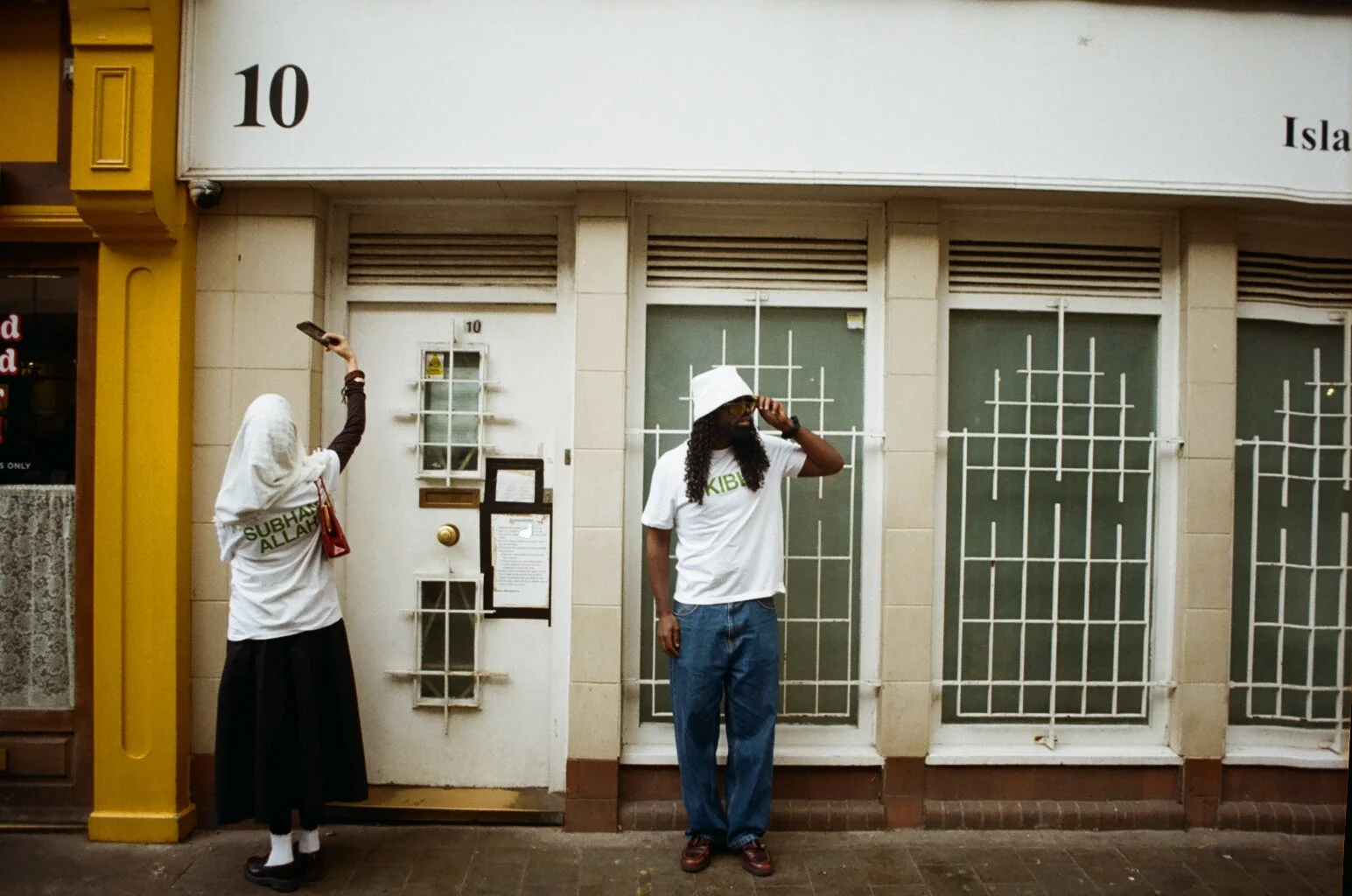
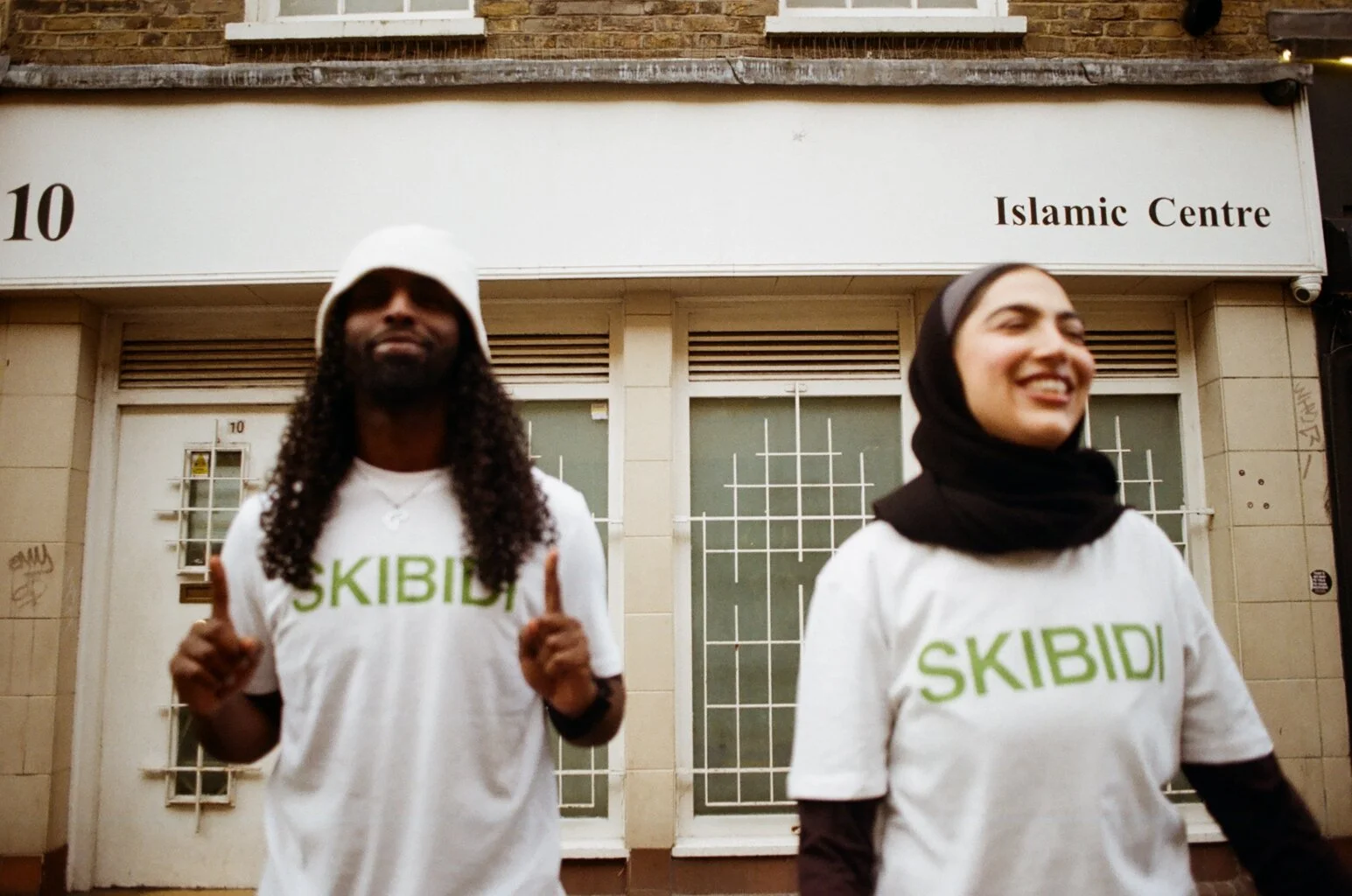
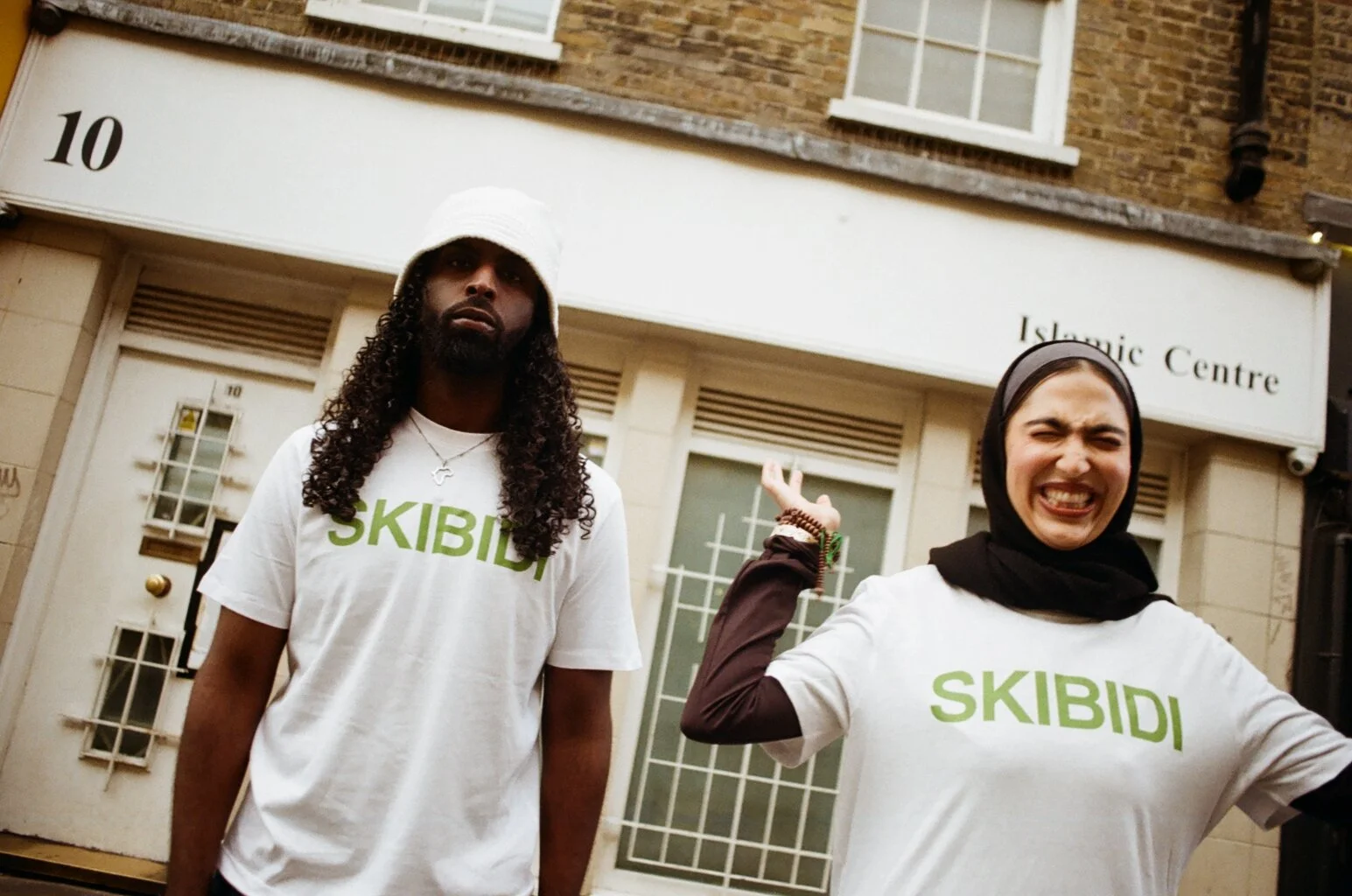
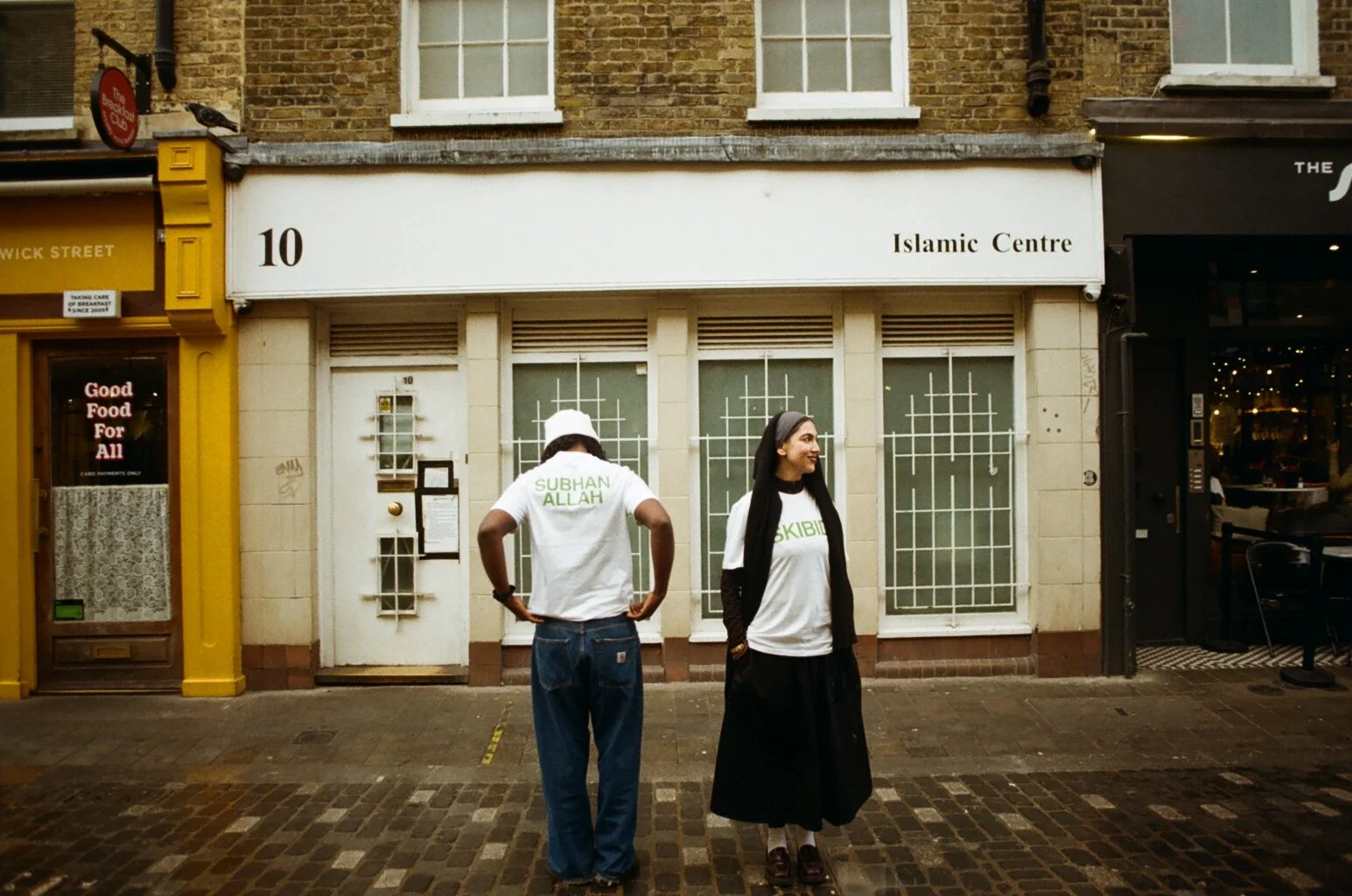
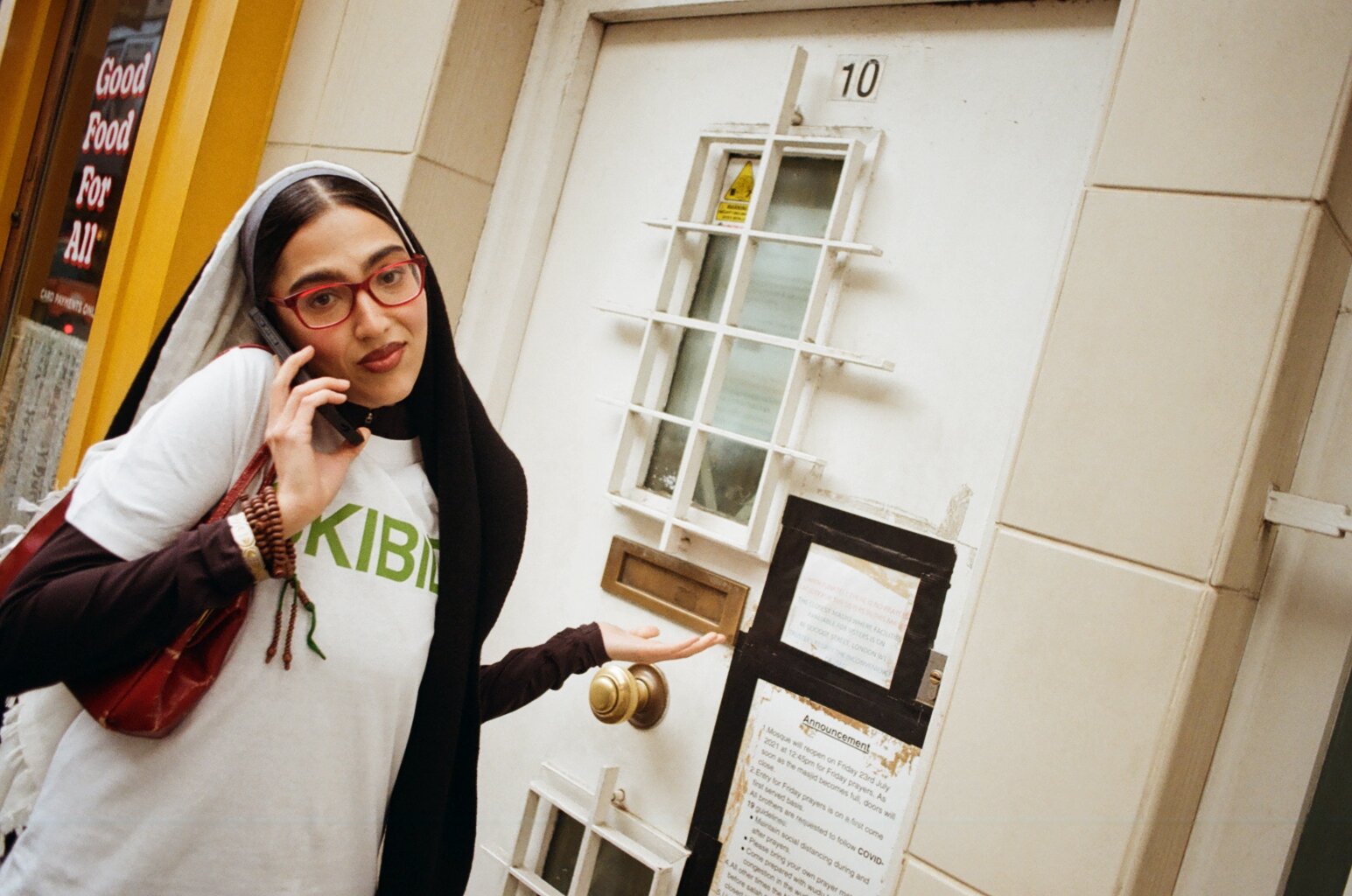
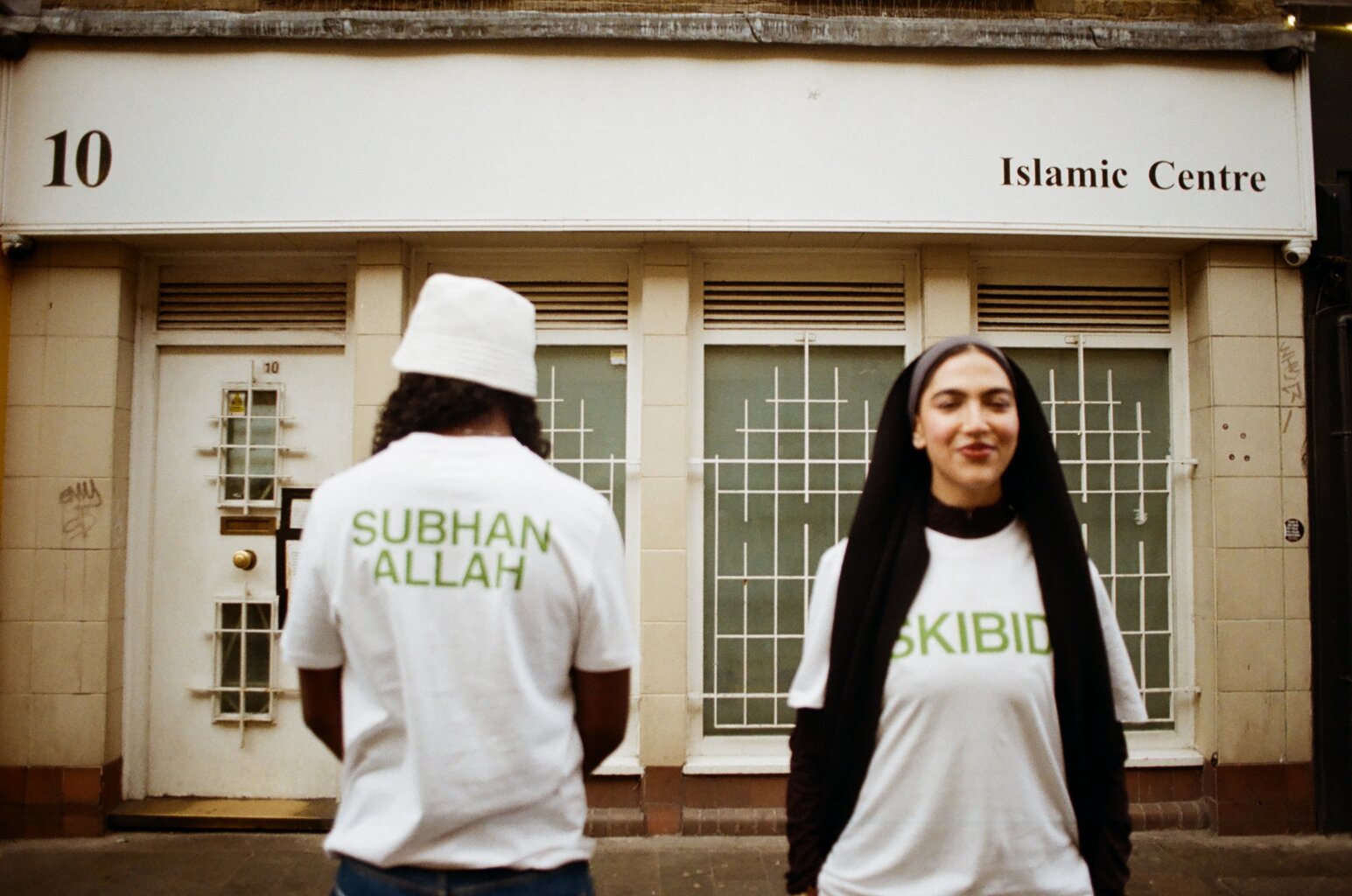
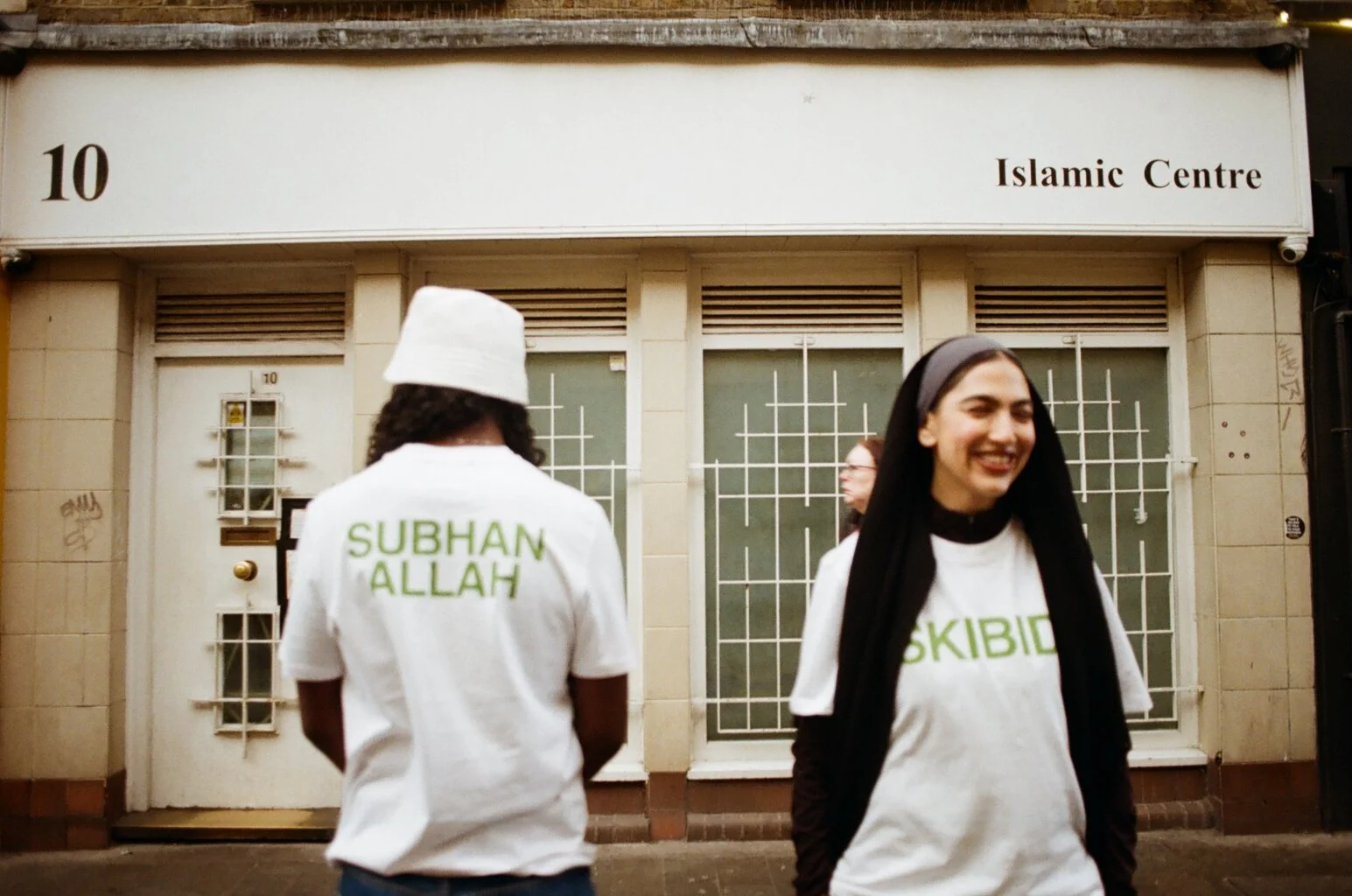
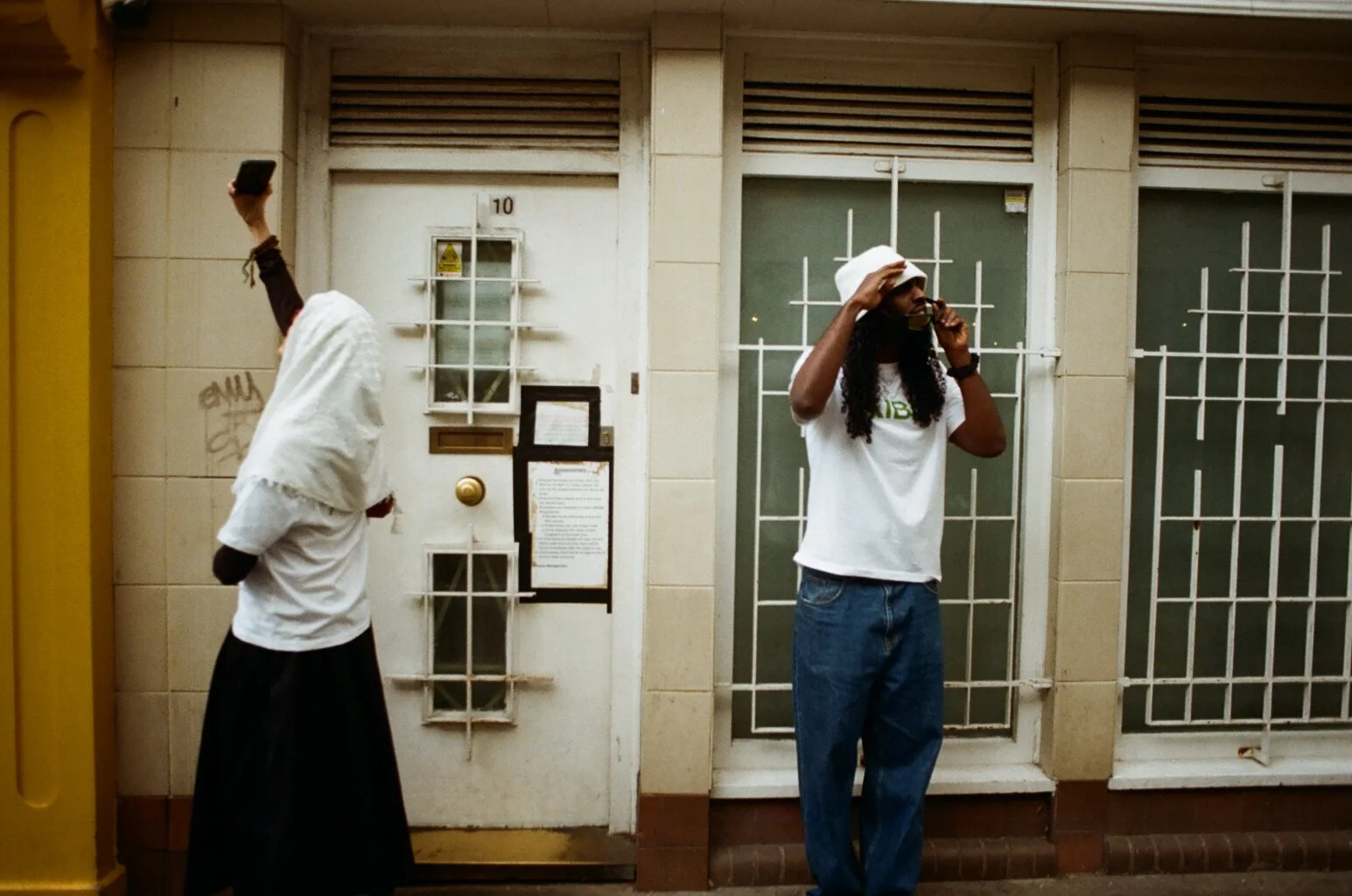
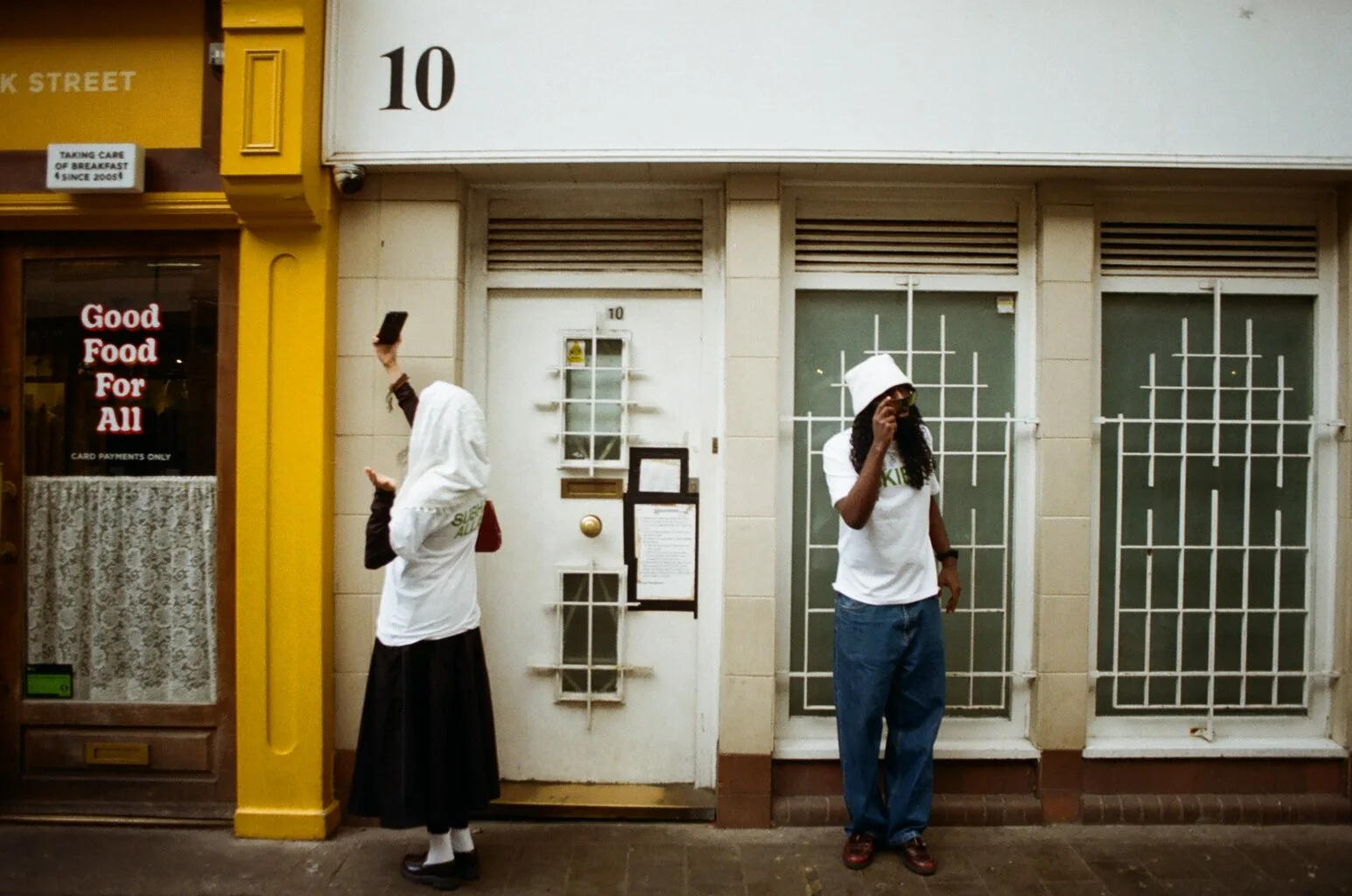
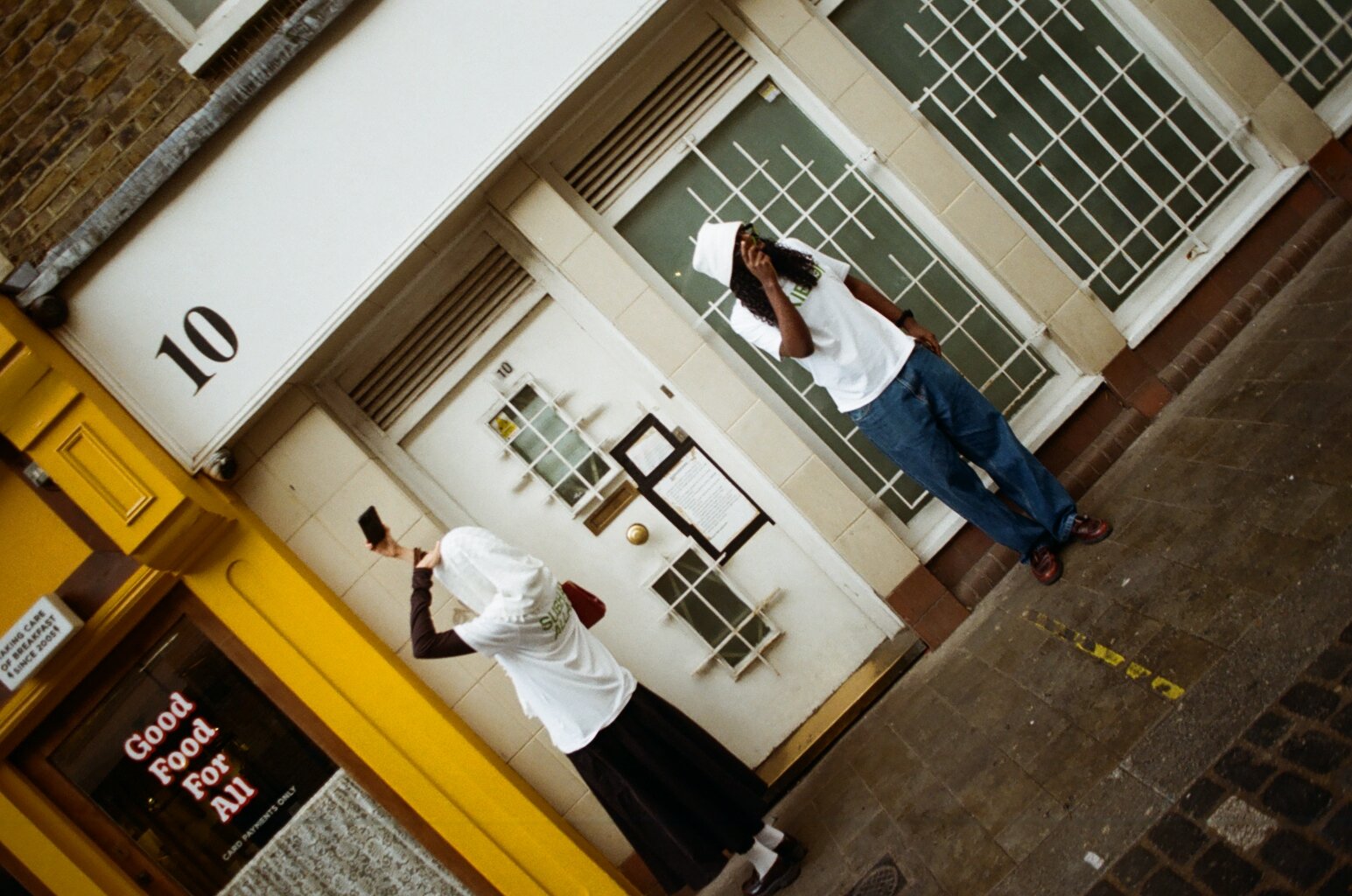
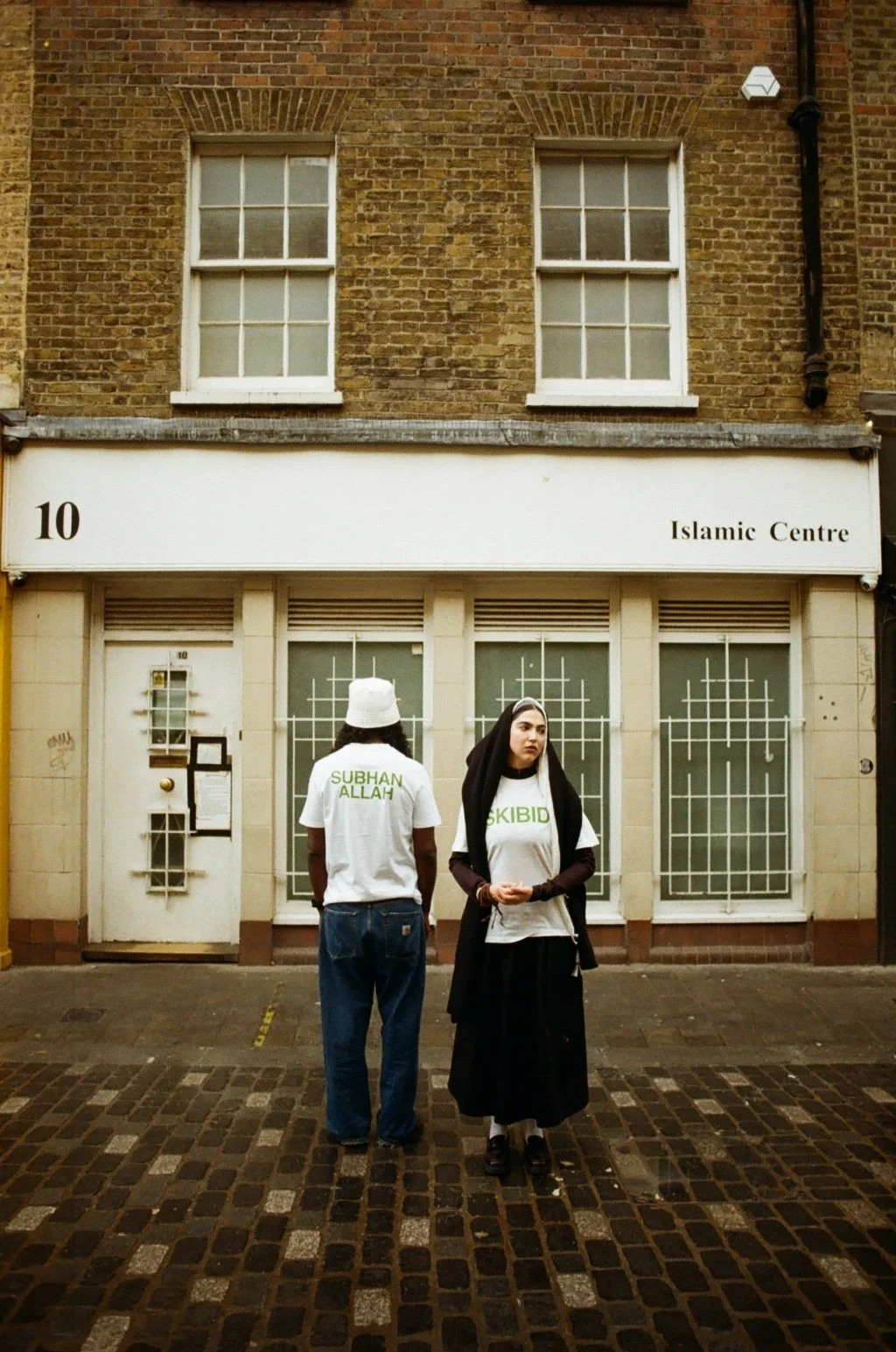
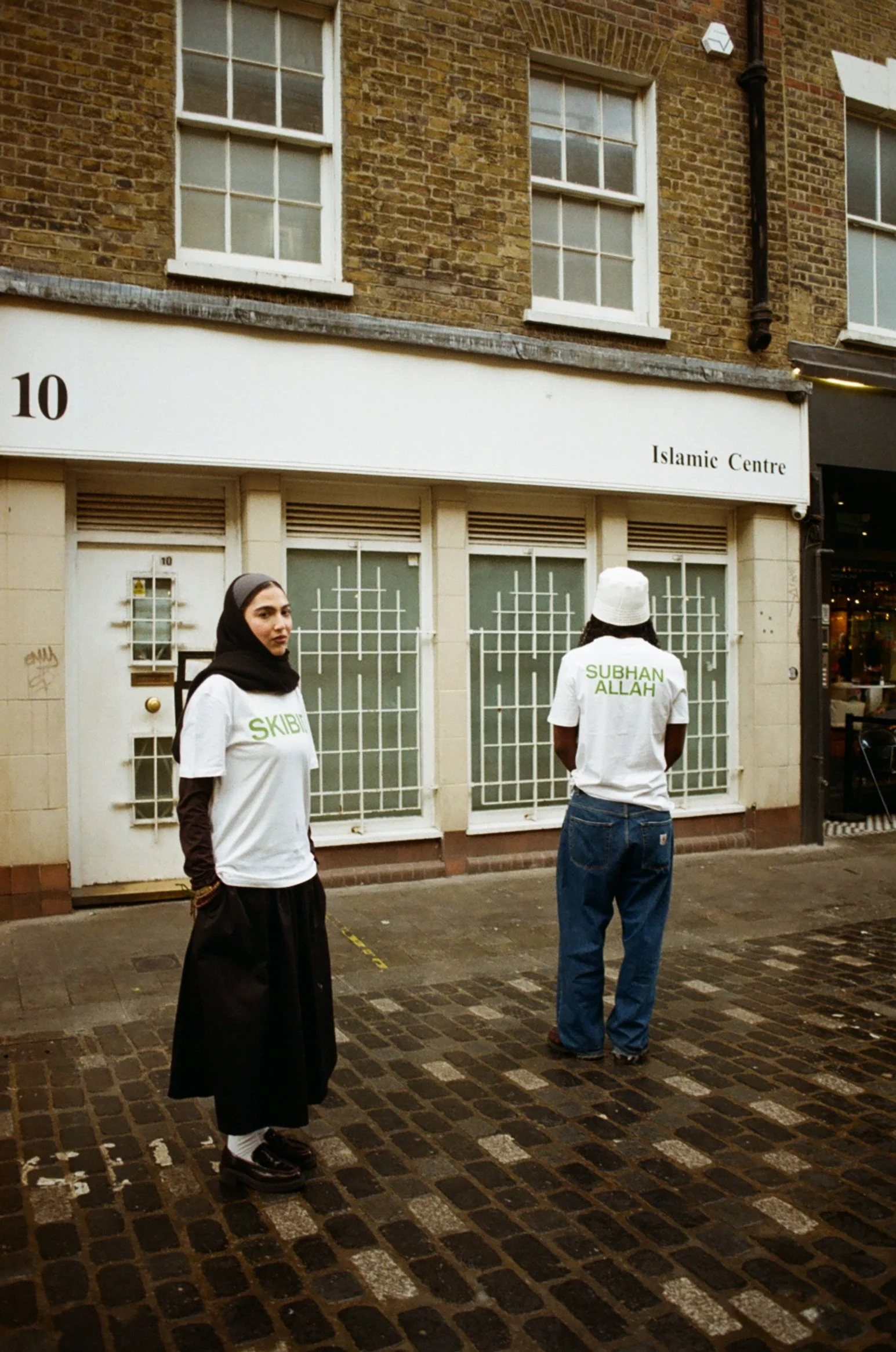
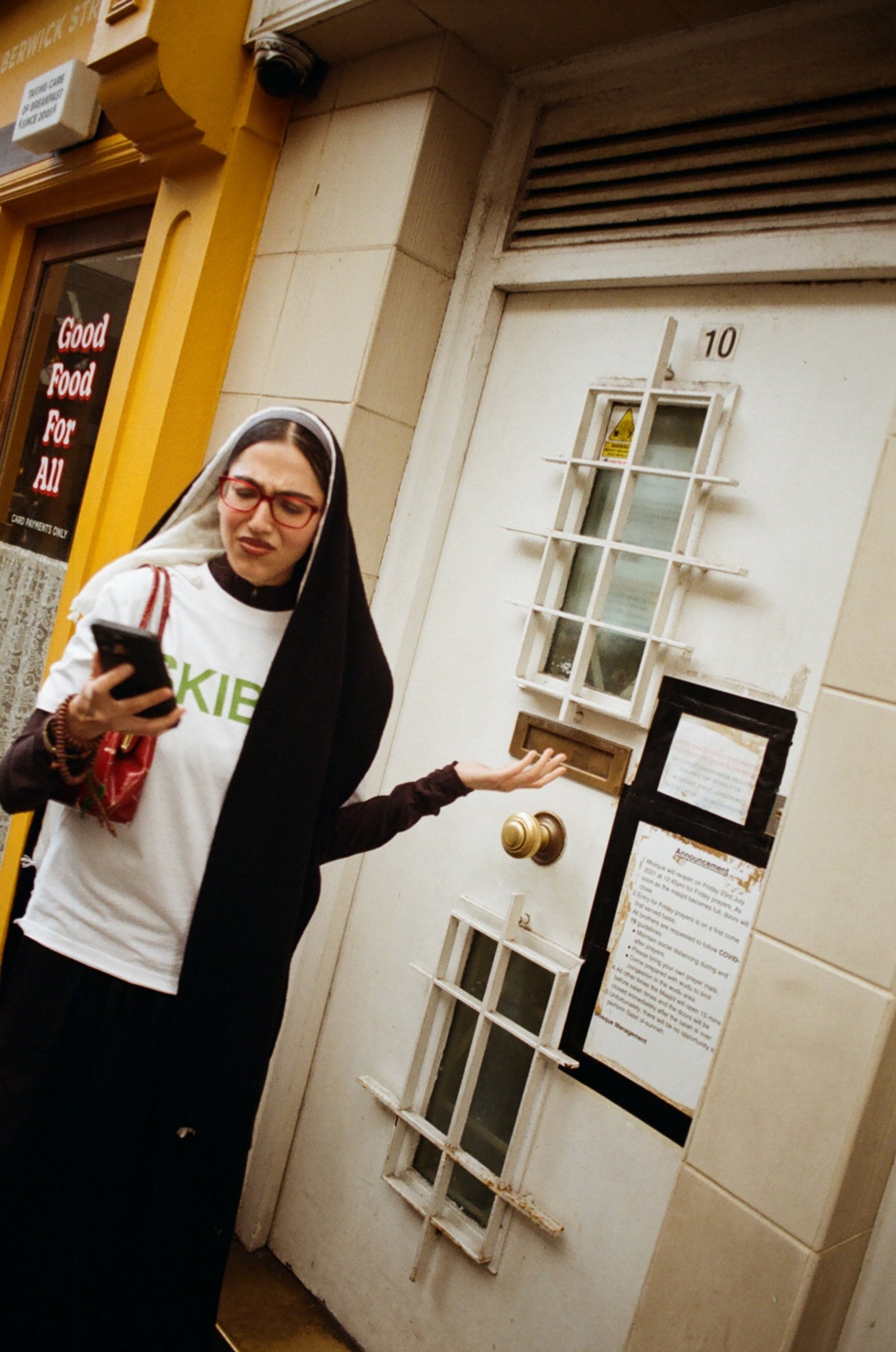
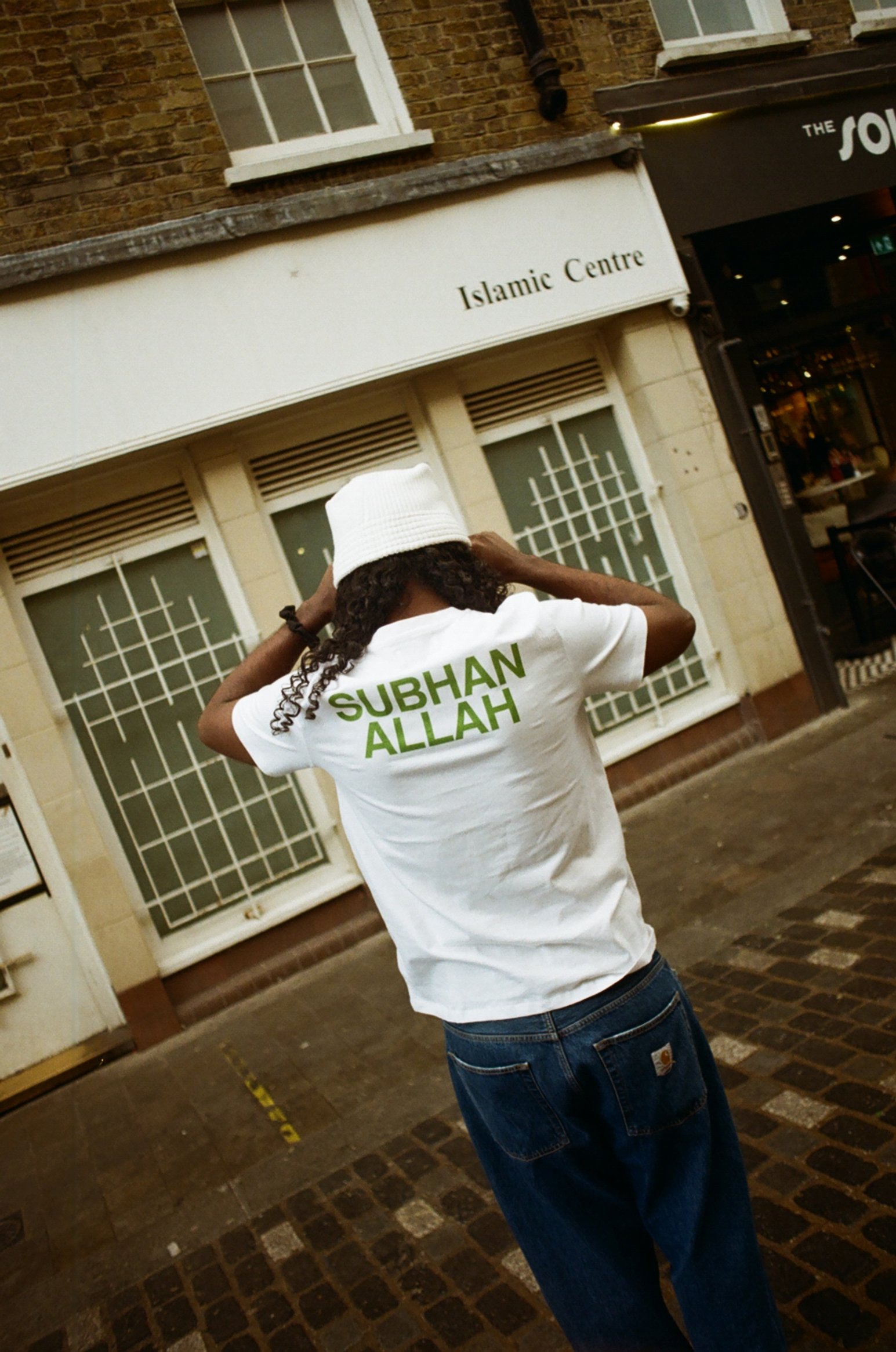
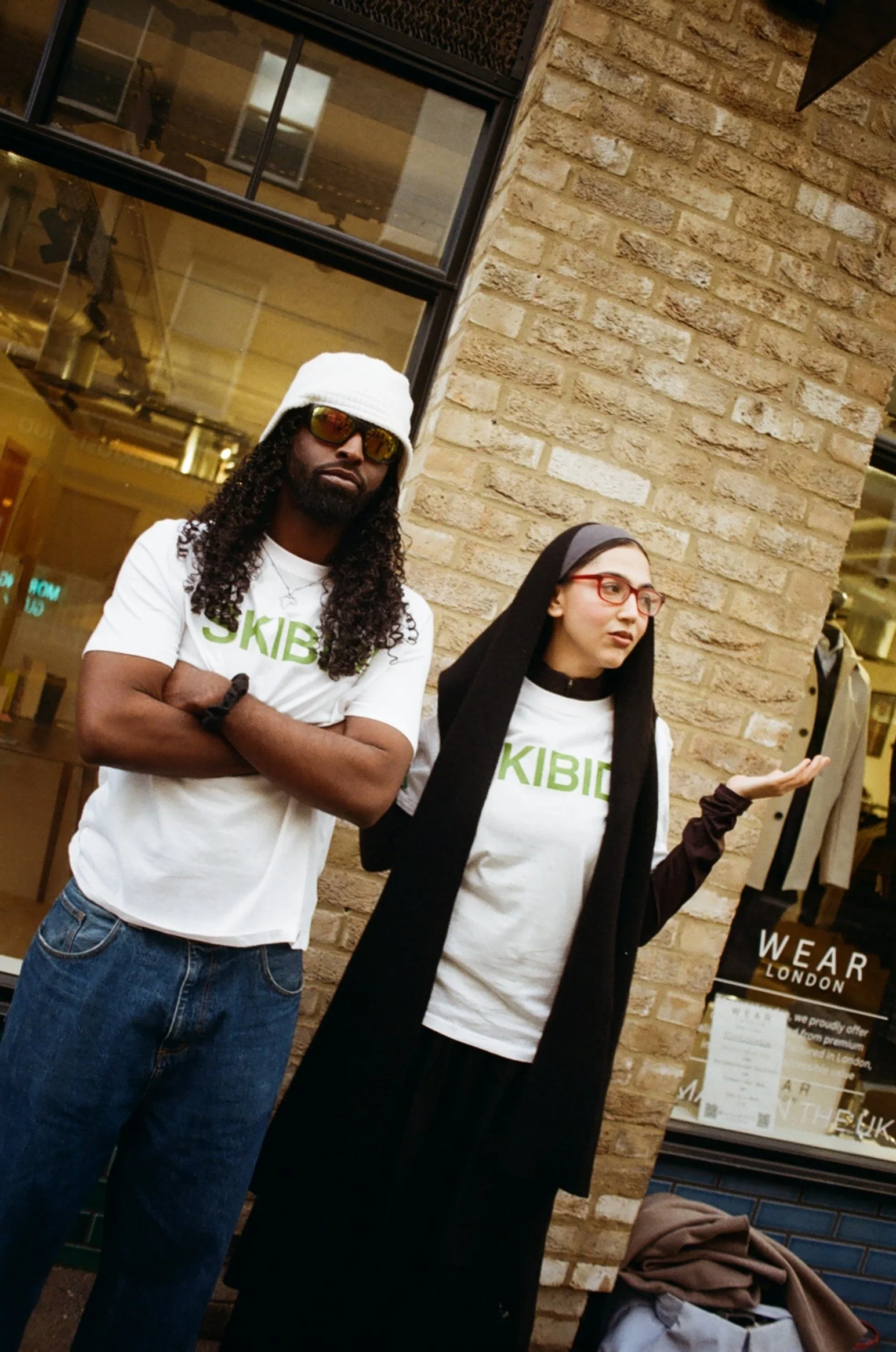
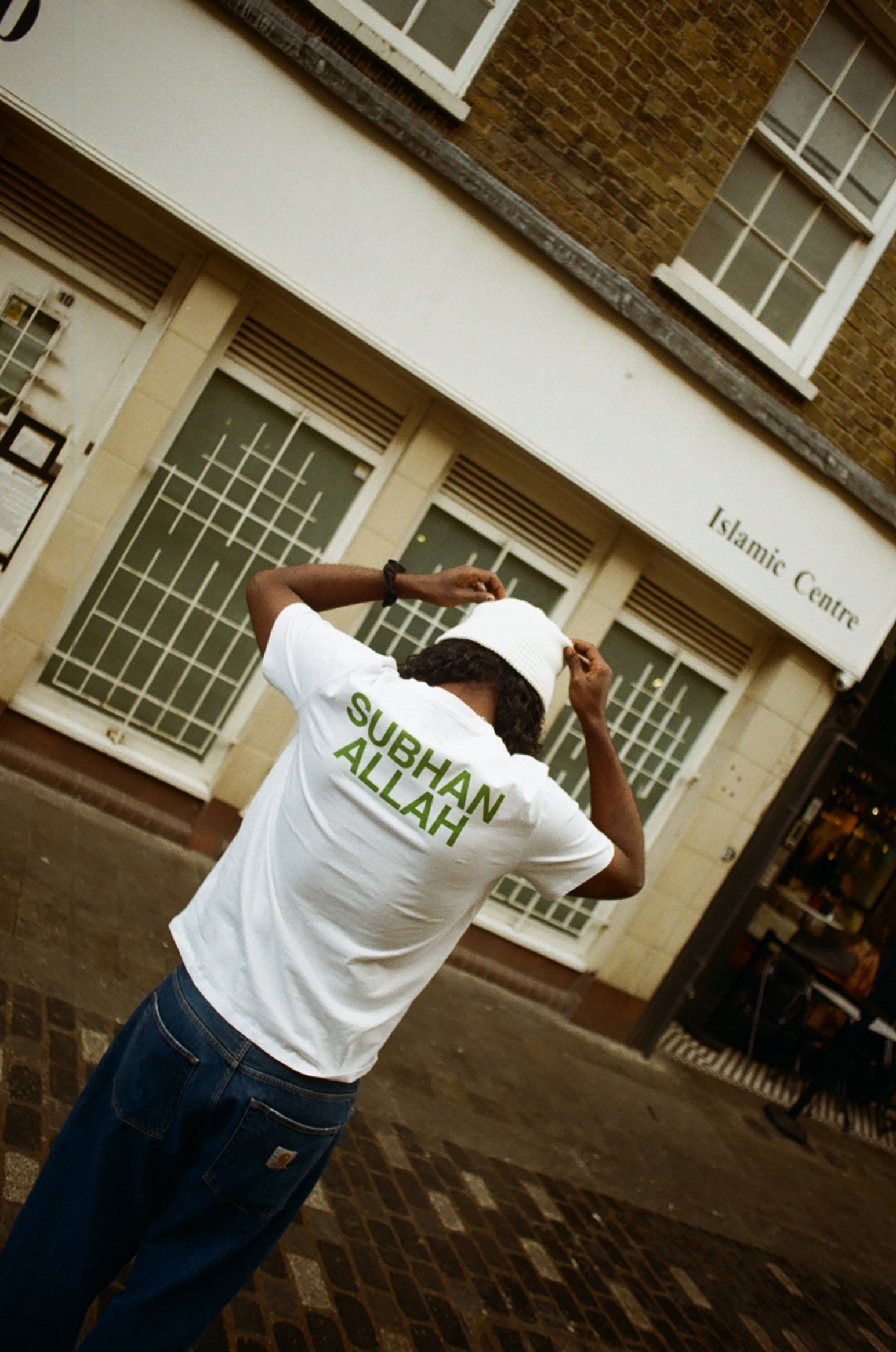
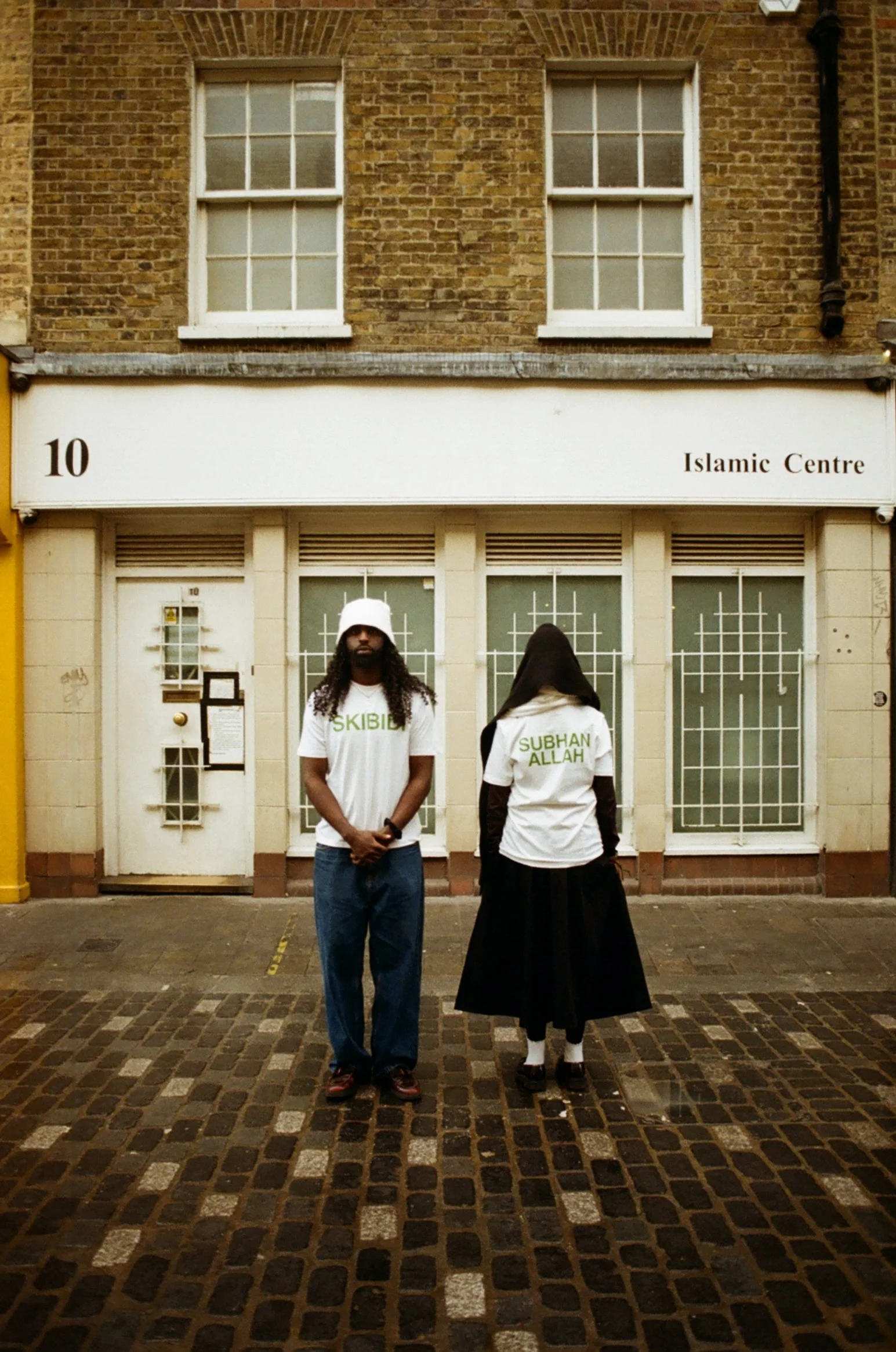
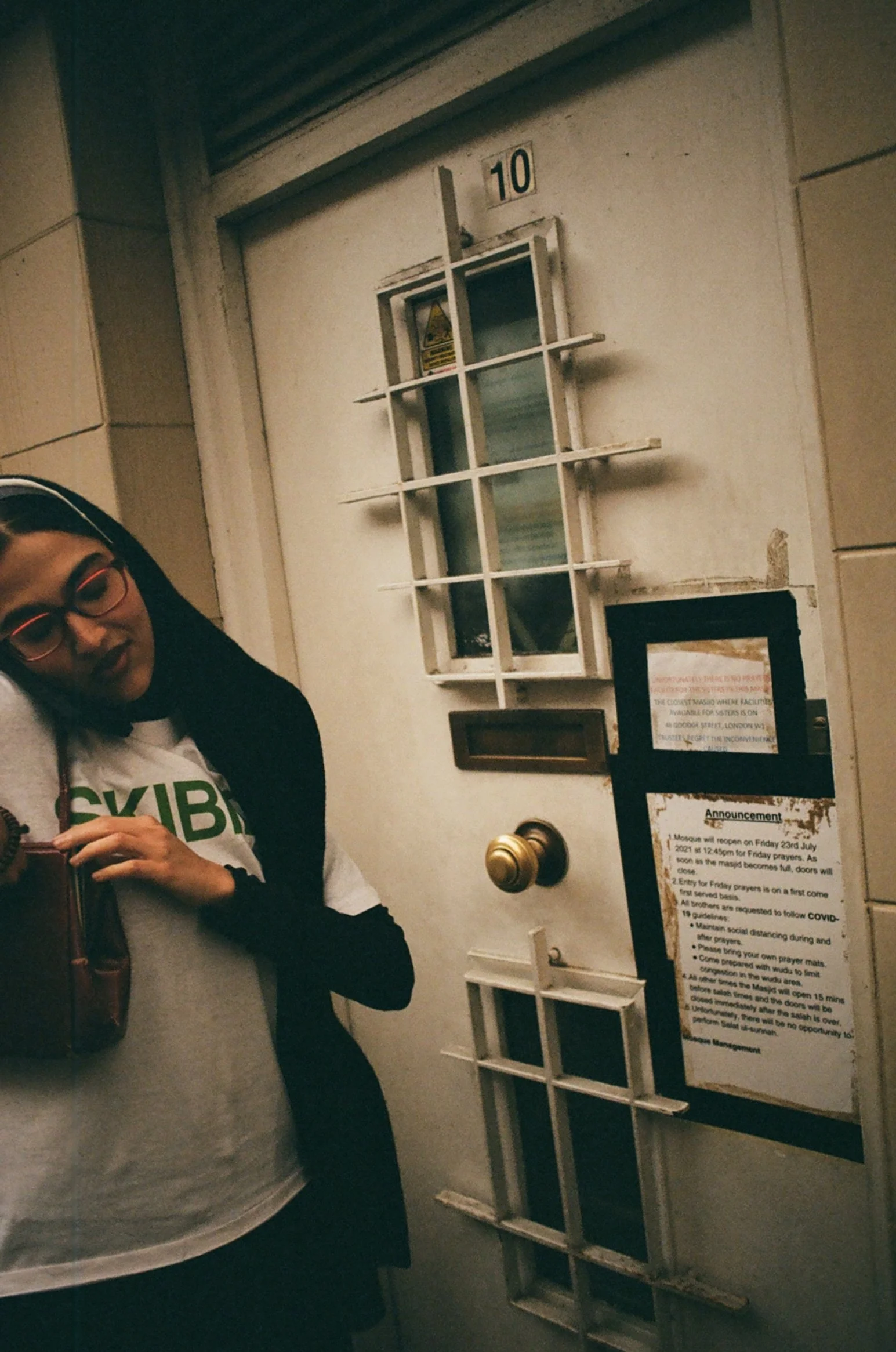
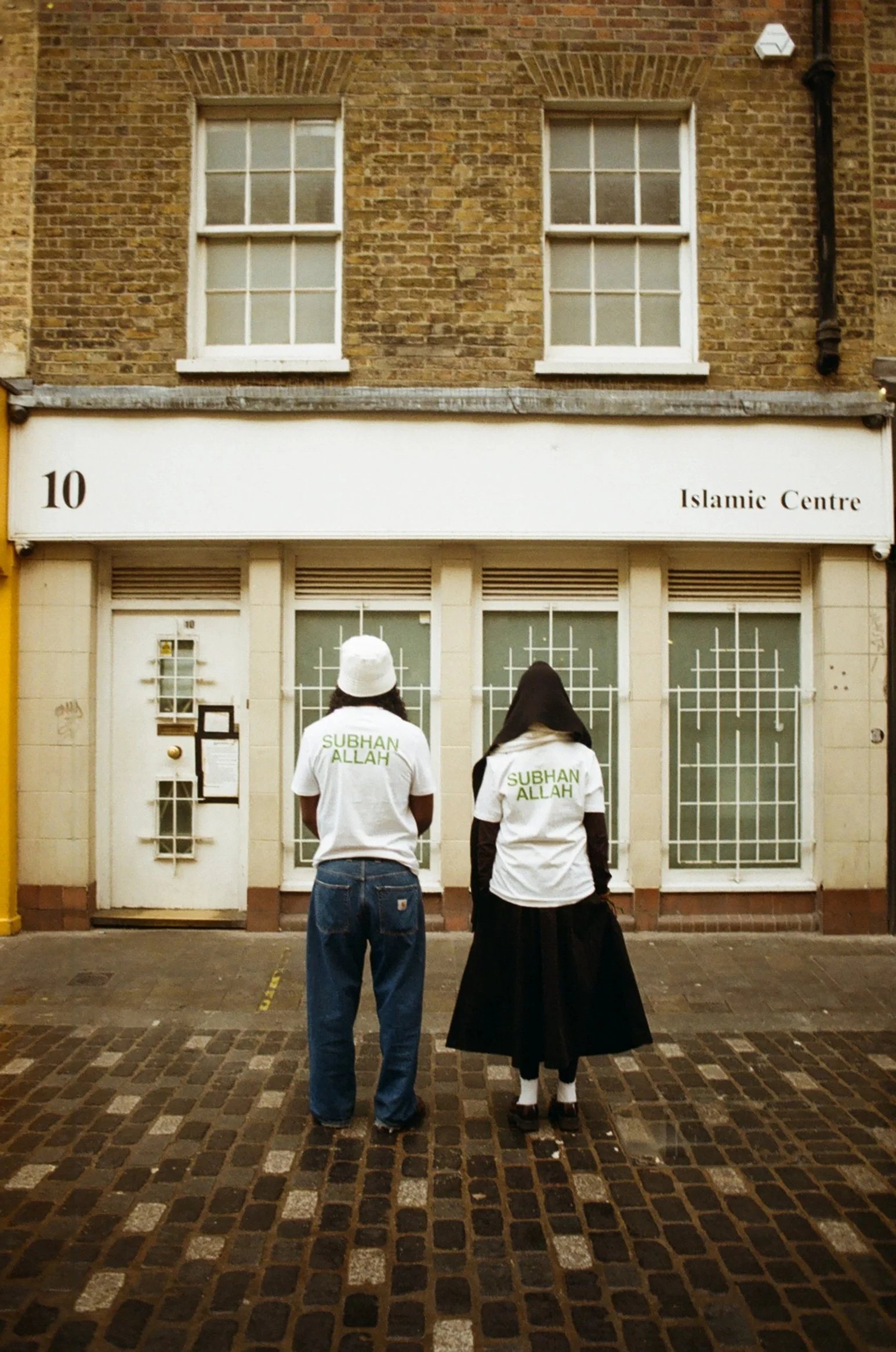
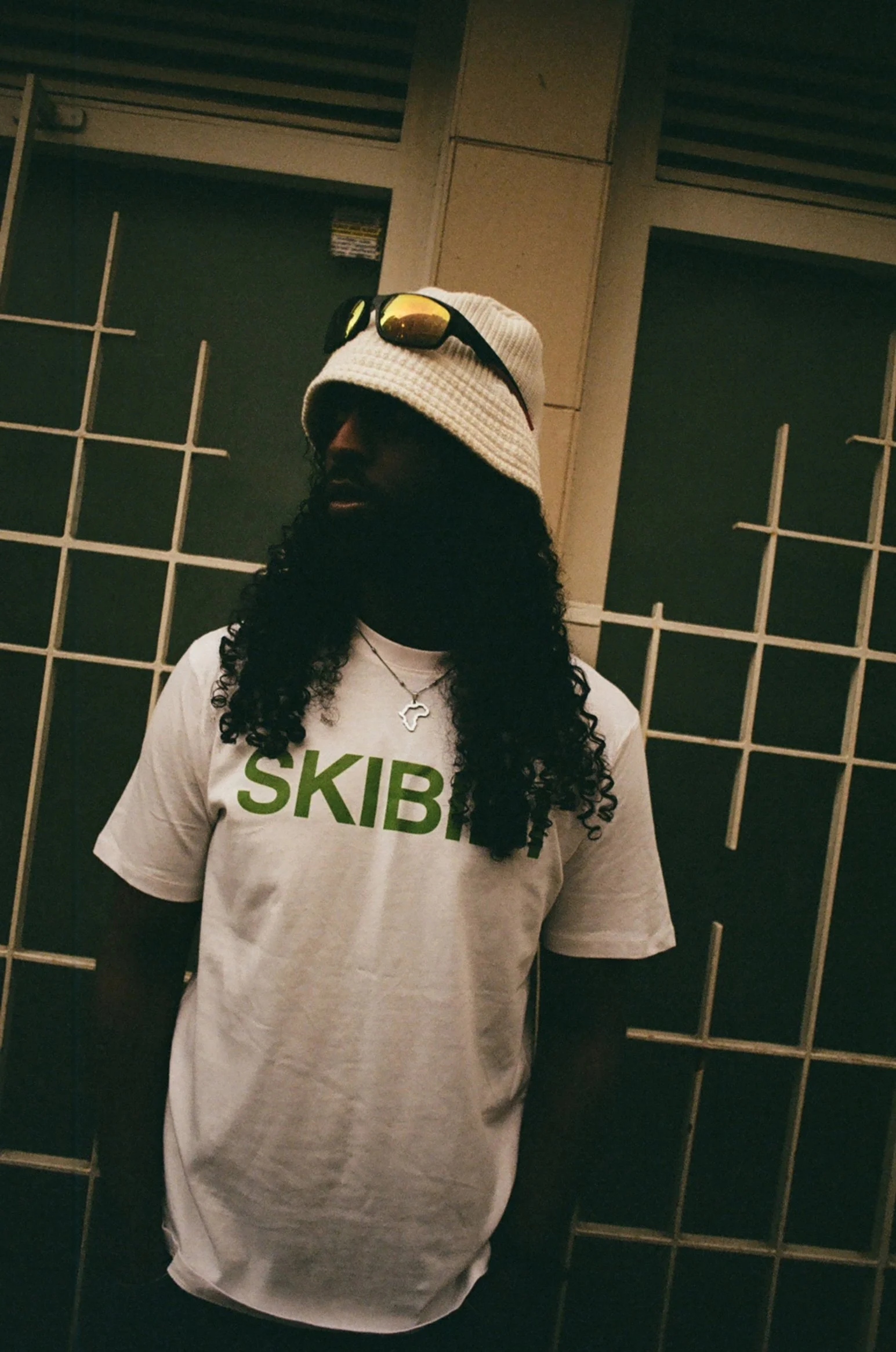
SUBHANALLAH / SKIBIDI was a digital performance in which the artist launched a fake clothing brand, satirising London streetwear aesthetics with a photo campaign outside Soho Islamic Centre, situated on the same street as the fashion hangout The Blue Posts pub. For the campaign the artist produced a limited run of T-shirts reading SKIBIDI on the front — a TikTok “brainrot” term linked to Gen Alpha’s waning attention spans — and SUBHANALLAH on the back, meaning “Glory to God”. This gesture paralleled the increasing cohabitation of both spiritual and satirical symbols within the same digital ecosystems — forms that often take identical shapes (t-shirts, cartoons, courses) to deliver seemingly divergent messages.
The work speculates on the cybernetic spiritual languages neologising in the keyboards and minds of tomorrow’s Muslims, and publicly asks how these languages will look, sound, and ultimately reconfigure religious expression. It makes tangible a present in which algorithmic feeds, AI, and social platforms have begun reshaping Islamic identity into a series of aestheticised digital codes — and yet still may advance to fully syncretised digital embodiments.
What resulted was widespread outrage on TikTok and Twitter, only compounded by a supporting musical work the artist released with sound artist Saia Dugan. This piece sampled a sped-up nasheed — a vocals-only music-prohibition circumventing genre that, under TikTok’s influence, is frequently reproduced, reverbed, slowed and sped, until it again resembles music. The videos for these songs employed a facial-recognition software that the artist developed titled THE ALLAH SEEEING EYE. Later expanded into a full-scale installation at the artist’s solo exhibition IBEARWITNESS10.
The campaign was bookended by an article-cum-manifesto published on DAZED MENA, which examined how AI, algorithms, and platform culture are accelerating toward what the Muslim Media Theorist Gary D. Bunt describes as a Muslim metaverse — a digitally mediated cultural space in which identity is flattened into aesthetics, metrics, and symbolic shortcuts. The article traced how platforms increasingly mediate faith through gamified devotion, AI-generated Qur’anic interfaces, Roblox raves, and halal influencer economies, asking whether these systems innocently marketise Islamic culture, or constitute a pseudo-transhumanist pre-upload phase of religious life itself.
In this context, SUBHANALLAH / SKIBIDI does not simply provoke reaction; it materialises the tensions outlined in its proposal, staging the collision initially observed by the artist, not theoretically, but as active phenomena.

DOUBLE-SIDED SCREENPRINT T-SHIRT FOR ALL UR DIGITAL DUALISTIC NEEDS. 100% COTTON. MADE TO ORDER SO ALLOW 3 DAY MAX LEAD TIME AND THEN NORMAL WORLDWIDE SHIPPING TIMES APPLY.